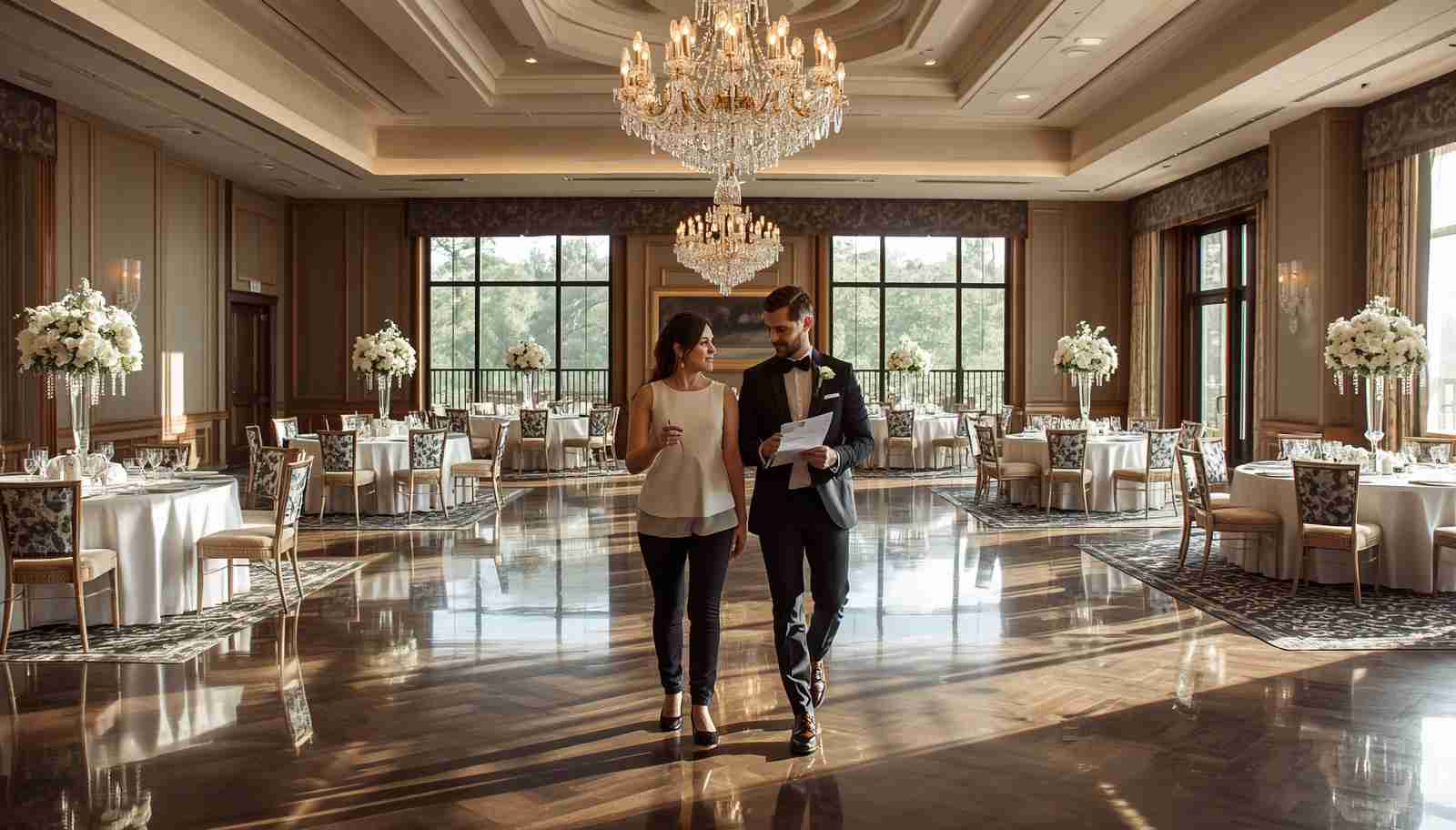
Most venue tours are designed to sell you on the prettiest room, not to show you what your wedding day will actually feel like. The right wedding venue tour questions uncover the operational details that separate a smooth, on-time celebration from a stressful scramble. If you are touring multiple elegant ballroom spaces in a centrally located Houston venue, focus on the answers you can verify in writing. That is how you compare venues fairly, even when every tour feels “perfect” in the moment. How To Use This Venue Tour Question List (So You Actually Compare Venues) A venue tour checklist only works if you treat it like a scoring tool, not a casual conversation. Your goal is to leave each tour with clear numbers, clear policies, and clear responsibility lines. Bring a written checklist and score each answer (clear, partial, vague) so venues are easy to compare later. A comprehensive wedding planning checklist can also help you organize venue research, budgeting, and vendor decisions. Ask for answers in writing when possible (proposal, inclusions sheet, sample contract) to avoid memory gaps. A sample contract and an itemized quote are more reliable than anything said during a walkthrough. Tour at the same time of day as your wedding if you can to see lighting, traffic, and noise conditions. In Houston, the difference between a 2 p.m. and 6 p.m. arrival can change parking flow, photo lighting, and even how hard the climate control has to work. What To Bring to a Houston Venue Tour Bring your guest count range, ceremony/reception timeline, and top 3 non-negotiables (indoor ceremony, late end time, open vendor policy). This keeps the conversation focused on fit, not fantasy. Bring a few inspiration photos plus practical items: measuring tape, phone charger, and a notes template. A measuring tape sounds nerdy until you realize your rectangle tables do not fit the dance floor you imagined. How To Capture Answers Quickly Take photos of each space plus key details: restrooms, loading entrance, bridal suite, and parking. These are the details that affect guest comfort and vendor load-in, yet they are easy to forget. Record exact numbers: hours included, overtime rate, deposit amount, and capacity by layout. If a venue cannot give you exact numbers, that is useful information too. Availability, Timing, and Schedule Control Your timeline is only “yours” if the venue’s hours of access, vendor policies, and cleanup rules support it. Many couples discover late in the planning process that venues limit early access or enforce stricter end times than they expected. These venue tour questions help uncover those restrictions before you sign a contract. Confirm date availability plus hold policy (how long they’ll hold your date and whether holds are free). Ask what happens if another couple requests the same date while you are “thinking about it.” Ask how many hours are included and what early access looks like for hair/makeup, décor, and vendor load-in. If you need a getting-ready suite early, get the exact time in writing. Clarify end time, last call, and cleanup deadlines, then ask about overtime pricing. A hard stop plus a high overtime rate can change your entire reception pacing. Questions That Prevent a Rushed Wedding Day “What time can vendors arrive, and what time must everyone be out?” This one question reveals vendor load-in windows, elevator rules, loading dock access, and whether the venue expects a fast teardown. “Is there a required timeline, or can we build our own with our planner?” Some venues require a house timeline to protect staffing and simultaneous events. That is not automatically bad, but you should know before you sign. Pricing, Deposits, and What’s Actually Included Venue tour questions about pricing go beyond the rental fee. What matters is the total of required staffing, required bar structure, required rentals, and mandatory fees. Request an itemized quote that separates venue rental, staffing, security, bar, rentals, and service fees. If you are comparing ballrooms, this is the only way to compare apples to apples. Ask what’s included by default (tables, chairs, linens, getting-ready suites, A/V) vs. add-ons. If a venue says “tables and chairs are included,” confirm quantities, styles, and setup and teardown responsibility. Confirm deposit amount, payment schedule, and whether payments are refundable or transferable. Ask how the cancellation policy and rescheduling policy work in real scenarios, not just in legal language. If you want a deeper breakdown of typical local pricing, review this guide to understanding Houston venue pricing and what drives it: a clear explanation of local venue pricing factors. Hidden-Cost Questions to Ask Up Front “What fees are mandatory (service charge, admin fee, gratuity, cleaning fee)?” Ask whether the service fee is a percentage and what it applies to. Confirm whether gratuity is included or expected on top. “Do you require specific rentals or preferred vendors that add cost?” Some venues require a preferred vendor list for catering, bar, or security staff. Others allow an open vendor policy but charge coordination or outside-vendor fees. Contract Clarity Checks Ask for a sample contract and confirm what triggers additional charges (damage, overtime, extra staff). Then ask who determines staffing needs and when they make that decision. Confirm insurance requirements and who is responsible for permits (if applicable). Venue tour questions should include liability insurance requirements. Ask what coverage limits vendors must carry and whether the venue requires a certificate of insurance naming the venue as an additional insured. For a practical checklist of what many venues include versus what becomes an add-on, see this breakdown of what is typically included in a venue rental. Capacity, Layout, and Guest Comfort Venue tour questions about capacity matter more than many couples realize. Different room layouts affect whether a seated dinner feels spacious or cramped and whether a cocktail-style reception has enough room for bar lines and mingling. Ask for capacity by layout (seated dinner, cocktail, ceremony, with dance floor) rather than a single number. A room that “holds 250” may only hold 180 comfortably with a dance floor and band. Confirm table types and sizes