
You found the ballroom. You can already picture the whole night. Then the contract shows up in your inbox, full of phrases like “non-refundable retainer” and “final balance due date,” and suddenly wedding venue deposits are all you can think about. This feels less like planning a party and more like closing on a house. Take a breath. Deposits and payment schedules confuse nearly every couple at first, mostly because nobody explains them until you’re staring at a signature line. So let’s explain them now, before you’re staring at one. We’re the team at Grand Central Houston, and we have this conversation on almost every tour. Here’s what we tell couples. What Are Wedding Venue Deposits, Exactly? A deposit (some venues call it a retainer or booking fee) is the payment that takes your date off the market. That last part matters more than couples realize. Until you’ve paid it and signed, most Houston venues will keep showing your date to other people, no matter how well your tour went or how many times the coordinator said “we’d love to have you.” Why do venues require it? Simple math. When a venue reserves a Saturday in April for you, it turns away everyone else who wanted that Saturday. If you later cancel, the venue can’t always resell the date. The deposit covers that risk, which is also why it’s almost never refundable. There’s an upside for you too. Paying the deposit usually locks your pricing, so a rate increase six months later won’t touch your contract. How Much Should You Expect to Pay? It depends on the venue, but around Houston you’ll mostly see two models. Some venues charge a percentage of your estimated total, usually somewhere between 25% and 50%. On a $15,000 package, that’s $3,750 to $7,500 due at signing. Others charge a flat booking fee, often $1,000 to $5,000, and split everything else into installments. Where you land within those ranges comes down to a few things: The date itself. Saturday evenings in October, November, March, and April are the most fought-over dates on any Houston calendar. Some venues ask for larger wedding venue deposits to hold them. If you’re open to a Friday, a Sunday, or a summer date, you’ll often find friendlier terms. How early you book. Book 12 to 18 months out and there’s simply more runway to spread payments across. This is part of why planning sites like The Knot and WeddingWire tell couples to lock the venue first. Every other vendor’s timeline hangs off that date anyway. What the package includes. An all-inclusive venue that handles catering, coordination, and décor structures payments differently than a bare room rental, because food and staffing costs firm up closer to the event. You can see how that bundled approach works on our wedding planning services page. The Typical Payment Schedule Every contract is different, but most Houston venues follow some version of this rhythm. You pay the deposit and sign at booking, usually 12 to 18 months out. A second installment lands somewhere around the six-to-nine-month mark and often brings you to half or three-quarters of the total. Then, 60 to 90 days out, many venues collect another payment when you finalize the menu, the bar package, and the floor plan, since those choices change the number. The last payment, based on your confirmed guest count, is due two to four weeks before the wedding. Almost nobody lets you pay after the event, so don’t count on it. One thing to watch: some venues also collect a separate damage deposit that comes back to you after the event. That is not the same as your booking deposit. Know which one you’re paying, and whether it counts toward your balance. Refunds, Cancellations, and Postponements Read this part of any contract twice. It’s the section couples skim and the one that matters most if life throws a curveball. The short version: wedding venue deposits are almost always non-refundable, and the closer to your date you cancel, the more of the total you’ll owe, because the venue has less time to rebook. Postponing is a different story. Plenty of venues will move your payments to a new date, sometimes for a fee, especially if the new date is in the same year or on a slower night. If flexibility matters to you, ask about it before you sign, not after. And whatever the coordinator promises on your tour, get it in writing. Verbal assurances are lovely. Contracts are enforceable. One more thing, and this one’s specific to us here on the Gulf Coast: Houston’s peak fall wedding season sits squarely inside Atlantic hurricane season, which the National Hurricane Center tracks from June 1 through November 30. Event cancellation insurance is cheap relative to what you’re spending, and it can protect every payment you’ve made if a storm forces a change of plans. The Texas Department of Insurance is a good place to start if you want to understand what these policies actually cover. Ten Questions to Ask Before You Sign Bring this list on your next venue tour. Any venue worth booking will answer all ten without flinching. Honestly, how a venue answers these tells you as much as the answers themselves. Clear, patient, everything in writing? That’s how they’ll run your wedding day too. Making the Payments Painless A payment schedule looks intimidating on paper and much less so once you break it down. Put every due date in your calendar the day you sign, then divide each installment by the months until it’s due. A $5,000 payment nine months out is $556 a month, which is a number you can actually plan around. Keep the money somewhere separate. A dedicated savings account shows you at a glance whether you’re on pace, and it keeps your final-balance fund from quietly funding other things. The Consumer Financial Protection Bureau has free budgeting tools if you want structure. Also, build in a cushion. Guest lists grow. Bar packages get upgraded. In our experience the final number runs a little higher than the original estimate far

Wedding Venue Contract Terms Every Couple Should Understand in Houston
A venue tour can make a ballroom feel settled before the paperwork says anything useful. In practice, clarity around Wedding Venue Contract Terms Every Couple Should Understand is what determines whether a Houston celebration runs smoothly, stays on budget, and gives every vendor enough time to do the job well. This guide explains the clauses that matter most, how to compare them, and where couples most often assume too much. At Grand Central Houston, we’ve found that many couples focus on venue style and amenities first, only to discover later that contract terms often have a greater impact on planning, budgeting, and vendor coordination. How to Read a Houston Wedding Venue Contract (Before You Fall in Love With the Space) Treat the contract as the operating manual for the event, not as a receipt for the deposit. A Houston venue agreement controls timeline, staffing, costs, vendor movement, and liability, which means it shapes the wedding day more directly than the sales conversation does. A wedding venue contract controls timelines, staffing, costs, vendor access, and liability. Understanding these wedding venue contract terms before signing can help couples avoid unexpected expenses and planning challenges later. Compare every promise from the venue tour, brochure, and email conversation against the written agreement. If a Houston venue promotes convenience, the contract should clearly define parking, loading access, room usage, and vendor access times. One missing detail can create unnecessary costs. For example, a sales representative may verbally approve an extended vendor access window, but the contract may list a shorter setup period. That difference can lead to rushed floral installation, compressed setup schedules, and additional labor expenses. Couples should identify who has authority to approve contract changes. In many venues, the sales representative books the event, the venue manager approves contract modifications, and the on-site coordinator manages the wedding day. Understanding those roles helps prevent confusion during planning. What Must Be in Writing (Not Just “Verbally Confirmed”) Anything with budget or timeline impact belongs in the contract or an addendum. That includes tables, chairs, linens, staffing, security, parking, and private-use areas such as the bridal suite and groom suite. Special allowances also need written language. Early vendor entry, extended cleanup, additional rehearsal time, and exceptions for cultural ceremony needs are not minor favors once the event calendar tightens. Quick Contract Checklist for Houston Couples Use this checklist before signing: A short checklist catches expensive omissions faster than a long email chain. If the venue is ideal for small to large guest counts, the contract should still specify what layout, furniture count, and room configuration apply to your event. Access Times and Timeline Clauses (The #1 Term Couples Regret Overlooking) Among all wedding venue contract terms, access times often create the biggest challenges. Many contracts sell a six-hour reception but provide only a limited setup and teardown window, creating scheduling issues for vendors and planners. Confirm exactly when each vendor may enter the property. Do not focus only on ballroom access. Vendors may also need time for loading dock access, elevator use, security check-in, staging areas, and rental deliveries. Teardown requirements matter just as much as setup rules. If the contract requires a complete clear-out by a specific deadline, late pickup by rental companies or florists may trigger overtime charges and additional staffing fees. Ask how the venue calculates overtime before assuming flexibility. Some venues bill by the hour. Others bill in 15-minute increments. A short delay can sometimes result in a full extra hour of charges. At Grand Central Houston, we often see couples focus on décor and menu selections first. Later, they discover that vendor access and setup schedules determine whether those plans are realistic. Adequate setup time helps vendors create the wedding experience couples envision. Vendor Arrival, Loading, and Setup Windows List every vendor category and the lead time each one needs. Caterers, florists, rental companies, entertainment teams, and photo or video crews all use the building differently, so one generic access clause rarely protects the full production schedule. Ask whether arrivals must be staggered and whether vehicle limits apply. In dense Houston event corridors, one loading rule can affect whether a DJ unloads on time or whether a floral team loses an hour waiting for dock clearance. Guest Arrival, Ceremony Start, and Hard End Time Define event time with precision. Guest arrival, ceremony start, cocktail hour, and reception hours should be distinct, because a contract that starts the clock at guest arrival may leave no buffer for pre-ceremony photos or room resets. Hard end times also affect exits and entertainment. Noise ordinances, curfew policies, and building-close procedures can limit late-night dancing, grand exits, or sparkler send-offs even when the printed reception end time looks generous. Overtime Fees and Staffing Minimums Check whether overtime automatically requires extra bartenders, security, or venue attendants. Those staffing minimums can make one extra hour far more expensive than the stated overtime rate suggests. Also confirm approval mechanics. Some venues require advance authorization for overtime, while others allow same-day extensions if staffing is available, and that difference changes how much flexibility you actually have. What Exactly Are You Renting? Spaces, Capacity, and Restrictions Wedding venue contract terms should identify every included area by name. “Reception hall access” is not enough if your event depends on a ballroom, ceremony space, cocktail hour space, groom suite, bridal suite, patios, restrooms, hallways, or a freight elevator for vendor deliveries. Review capacity limits carefully. Capacity often changes based on the floor plan. A ballroom that accommodates 250 guests in a theater layout may hold fewer guests for a seated dinner with a dance floor, buffet, stage, and sweetheart table. This distinction becomes especially important in venues with multiple ballrooms. The contract should identify the specific room reserved for your event and the layout that supports your guest count. Review all venue restrictions before signing. Décor limitations, open flame policies, confetti restrictions, fog machine rules, accessibility features, and venue-specific requirements can affect both design plans and guest comfort. Accessibility deserves careful attention.
How Far in Advance to Book a Wedding Venue in Houston
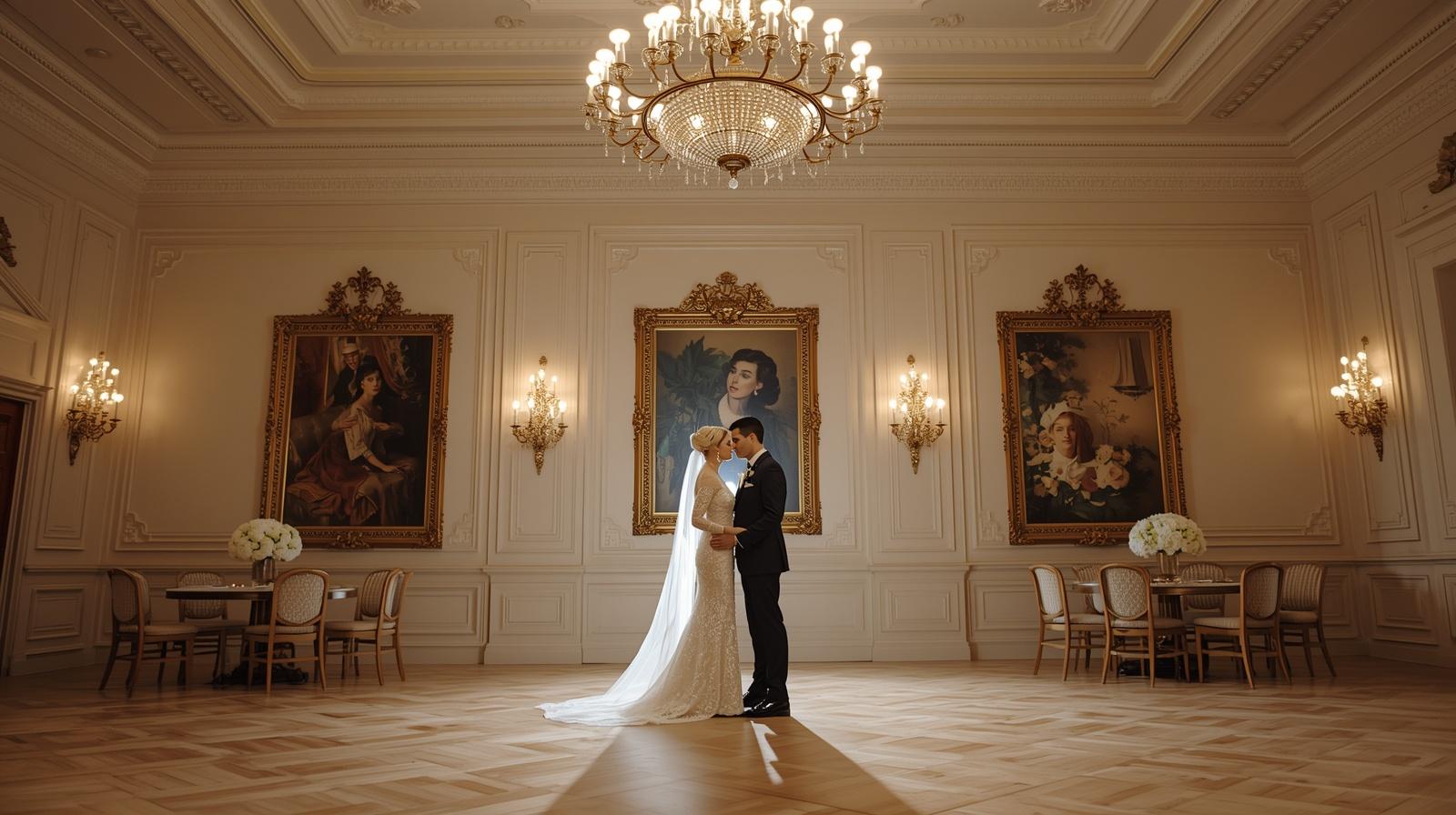
Houston couples are often surprised by how early prime dates disappear, especially for Saturday weddings in March–May and October–November. If you plan to book wedding venue space during these popular seasons, start earlier than you may expect. From our venue team’s perspective in the Houston area, the biggest difference between booking 6 months out and 14 months out comes down to flexibility. Your date, season, and guest count all affect availability. If you want the widest choice of wedding reception venues, floor plan options, and vendor availability, start your planning timeline with the venue. Don’t begin with the color palette or invitation suite. At Grand Central Houston, we regularly speak with couples who are surprised to learn that popular spring and fall wedding dates can disappear more than a year in advance. The Short Answer: Recommended Booking Windows for Houston Most couples book 9–18 months out in Houston, and 12–18 months is ideal for peak-season Saturdays. If you have a specific Saturday in spring weddings or fall weddings, it’s normal to see venues booked more than a year ahead. Timing varies because Houston demand is not one-size-fits-all. Seasonality, the day of week, guest count, and venue type (ballroom vs. garden vs. hotel) all change how quickly calendars fill. Set expectations early: popular dates can book 12–18+ months out, while off-peak season dates and weekdays often have more availability. A Friday wedding or Sunday wedding can also open doors to venues you assumed were “fully booked.” Quick Booking Timeline by Wedding Type Why the Venue Should Be Your First Big Booking The venue often sets the date, and the date drives everything else. A well-structured wedding planning timeline can help couples understand why venue selection typically comes before most other major decisions Once you book wedding venue space, your photographer, wedding planner, caterer, and entertainment team can confirm availability and provide accurate pricing. The venue also shapes a large part of your budget. Venue rental, catering rules, bar packages, staffing, security, cleanup, and rentals all affect the final cost. As a result, two venues with the same base rate can produce very different totals. Capacity is another hidden factor. A 220-guest wedding has far fewer venue options than a 110-person celebration. Because of that, larger weddings often require earlier booking. Indoor venues are especially popular in the Houston area. They reduce weather-related concerns and provide more planning certainty. Many couples choose an indoor venue or ceremony space to avoid last-minute stress caused by heat, humidity, or sudden storms. What We See Most Often at Grand Central Houston Couples who book 12–18 months out typically have the most flexibility on dates, vendor choices, and floor plan options. They also have more time to compare flexible event layouts, especially when choosing between multiple ballroom spaces. A common mistake is waiting to finalize every detail before securing a venue, when the venue is the detail that unlocks the rest. Once the date and space are locked, decisions like catering style, timeline, and rentals become simpler and faster. Houston Timing Factors That Change How Early You Should Book Seasonality matters more in Houston than many couples expect. Spring and fall demand is higher, while summer weddings and winter weddings can be more flexible, especially outside holiday weekend dates. Day-of-week pricing and availability also shift the equation. Saturdays go first, while Fridays and Sundays often remain open longer and may come with more negotiating room on event time or inclusions. Guest count changes the timeline because larger weddings have fewer workable venues. If you need a ballroom with real capacity, comfortable circulation, and parking, you should start earlier than a couple hosting a micro wedding. Venue category plays a role, too. Ballrooms, barns, historic venues, hotels, and gardens book differently based on how many dates they can host, noise curfews, load-in and load-out rules, and whether they have in-house infrastructure. Peak Months and High-Demand Dates to Watch March–May and October–November tend to be the fastest to book in Houston. Those windows have the strongest demand for comfortable temperatures and predictable guest travel. Holiday weekend dates and culturally popular dates can compress availability even further. If your family is aiming for a specific weekend, plan for fewer choices and faster decision-making. Why Indoor Ballrooms Often Book Earlier in Houston Houston weather plays a significant role in venue demand. Outdoor ceremonies can be beautiful, but many couples prefer indoor ballrooms. These venues eliminate concerns about heat, humidity, sudden rain, and last-minute weather changes. An indoor ballroom creates a more predictable experience for couples and guests. Climate-controlled spaces, built-in infrastructure, and weather protection simplify planning. As a result, couples can focus on celebrating instead of worrying about backup plans. Because of these advantages, many indoor wedding venues in Houston experience strong demand during peak wedding seasons. For couples planning to book wedding venue space, availability is an important consideration. Weather-proof venues often have less availability than expected, especially during spring and fall. Starting your venue search early gives you access to a wider selection of dates and floor plan options. Indoor vs. Outdoor Considerations in Houston Weather Houston weather pushes many couples toward a weather-proof venue, even if they still want outdoor photos. Heat, humidity, and sudden storms can turn a “perfect plan” into a stressful pivot if there’s no covered backup. If you want an outdoor ceremony or garden portraits, ask about a rain plan in writing. You should also ask how quickly the venue can flip to an indoor ceremony space, and what the staffing plan looks like if weather changes within an hour of start time. A Step-by-Step Venue Booking Plan (From Search to Signed Contract) Start with non-negotiables: a date range (not a single date), a guest count range, a budget range, and a preferred style. If you’re comparing a luxury wedding atmosphere with high-end design and finishes versus a more rustic space, decide what actually affects your guest experience. Build a venue shortlist and tour efficiently. You’re not only comparing aesthetics, you’re comparing