
A venue tour can make a ballroom feel settled before the paperwork says anything useful. In practice, clarity around Wedding Venue Contract Terms Every Couple Should Understand is what determines whether a Houston celebration runs smoothly, stays on budget, and gives every vendor enough time to do the job well. This guide explains the clauses that matter most, how to compare them, and where couples most often assume too much. At Grand Central Houston, we’ve found that many couples focus on venue style and amenities first, only to discover later that contract terms often have a greater impact on planning, budgeting, and vendor coordination. How to Read a Houston Wedding Venue Contract (Before You Fall in Love With the Space) Treat the contract as the operating manual for the event, not as a receipt for the deposit. A Houston venue agreement controls timeline, staffing, costs, vendor movement, and liability, which means it shapes the wedding day more directly than the sales conversation does. A wedding venue contract controls timelines, staffing, costs, vendor access, and liability. Understanding these wedding venue contract terms before signing can help couples avoid unexpected expenses and planning challenges later. Compare every promise from the venue tour, brochure, and email conversation against the written agreement. If a Houston venue promotes convenience, the contract should clearly define parking, loading access, room usage, and vendor access times. One missing detail can create unnecessary costs. For example, a sales representative may verbally approve an extended vendor access window, but the contract may list a shorter setup period. That difference can lead to rushed floral installation, compressed setup schedules, and additional labor expenses. Couples should identify who has authority to approve contract changes. In many venues, the sales representative books the event, the venue manager approves contract modifications, and the on-site coordinator manages the wedding day. Understanding those roles helps prevent confusion during planning. What Must Be in Writing (Not Just “Verbally Confirmed”) Anything with budget or timeline impact belongs in the contract or an addendum. That includes tables, chairs, linens, staffing, security, parking, and private-use areas such as the bridal suite and groom suite. Special allowances also need written language. Early vendor entry, extended cleanup, additional rehearsal time, and exceptions for cultural ceremony needs are not minor favors once the event calendar tightens. Quick Contract Checklist for Houston Couples Use this checklist before signing: A short checklist catches expensive omissions faster than a long email chain. If the venue is ideal for small to large guest counts, the contract should still specify what layout, furniture count, and room configuration apply to your event. Access Times and Timeline Clauses (The #1 Term Couples Regret Overlooking) Among all wedding venue contract terms, access times often create the biggest challenges. Many contracts sell a six-hour reception but provide only a limited setup and teardown window, creating scheduling issues for vendors and planners. Confirm exactly when each vendor may enter the property. Do not focus only on ballroom access. Vendors may also need time for loading dock access, elevator use, security check-in, staging areas, and rental deliveries. Teardown requirements matter just as much as setup rules. If the contract requires a complete clear-out by a specific deadline, late pickup by rental companies or florists may trigger overtime charges and additional staffing fees. Ask how the venue calculates overtime before assuming flexibility. Some venues bill by the hour. Others bill in 15-minute increments. A short delay can sometimes result in a full extra hour of charges. At Grand Central Houston, we often see couples focus on décor and menu selections first. Later, they discover that vendor access and setup schedules determine whether those plans are realistic. Adequate setup time helps vendors create the wedding experience couples envision. Vendor Arrival, Loading, and Setup Windows List every vendor category and the lead time each one needs. Caterers, florists, rental companies, entertainment teams, and photo or video crews all use the building differently, so one generic access clause rarely protects the full production schedule. Ask whether arrivals must be staggered and whether vehicle limits apply. In dense Houston event corridors, one loading rule can affect whether a DJ unloads on time or whether a floral team loses an hour waiting for dock clearance. Guest Arrival, Ceremony Start, and Hard End Time Define event time with precision. Guest arrival, ceremony start, cocktail hour, and reception hours should be distinct, because a contract that starts the clock at guest arrival may leave no buffer for pre-ceremony photos or room resets. Hard end times also affect exits and entertainment. Noise ordinances, curfew policies, and building-close procedures can limit late-night dancing, grand exits, or sparkler send-offs even when the printed reception end time looks generous. Overtime Fees and Staffing Minimums Check whether overtime automatically requires extra bartenders, security, or venue attendants. Those staffing minimums can make one extra hour far more expensive than the stated overtime rate suggests. Also confirm approval mechanics. Some venues require advance authorization for overtime, while others allow same-day extensions if staffing is available, and that difference changes how much flexibility you actually have. What Exactly Are You Renting? Spaces, Capacity, and Restrictions Wedding venue contract terms should identify every included area by name. “Reception hall access” is not enough if your event depends on a ballroom, ceremony space, cocktail hour space, groom suite, bridal suite, patios, restrooms, hallways, or a freight elevator for vendor deliveries. Review capacity limits carefully. Capacity often changes based on the floor plan. A ballroom that accommodates 250 guests in a theater layout may hold fewer guests for a seated dinner with a dance floor, buffet, stage, and sweetheart table. This distinction becomes especially important in venues with multiple ballrooms. The contract should identify the specific room reserved for your event and the layout that supports your guest count. Review all venue restrictions before signing. Décor limitations, open flame policies, confetti restrictions, fog machine rules, accessibility features, and venue-specific requirements can affect both design plans and guest comfort. Accessibility deserves careful attention.
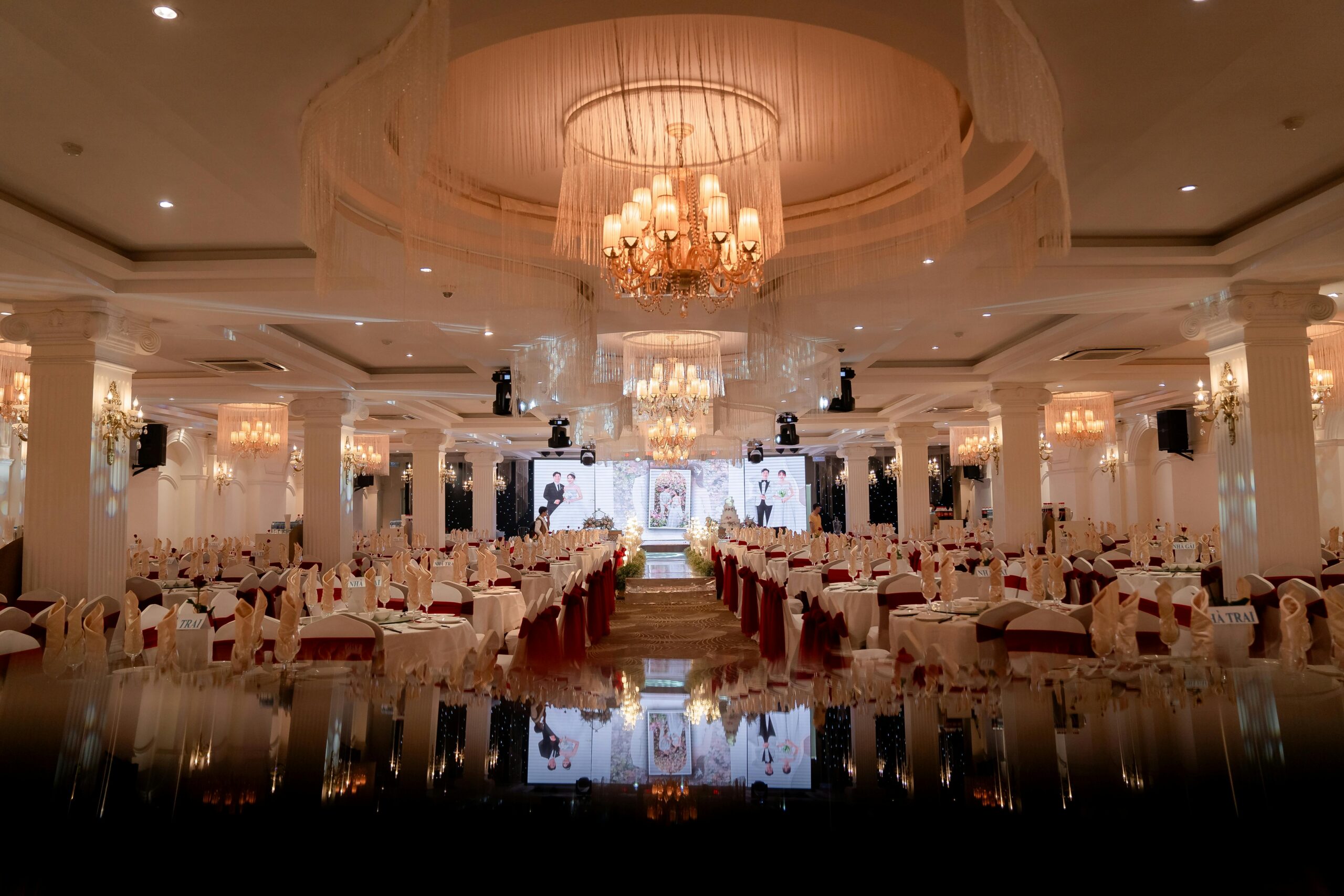
What’s Included in a Houston Wedding Venue Rental? A Practical Breakdown
Most “surprise” wedding costs in the Houston area come from one place: assuming the venue rental fee includes labor, rentals, and logistics when it really only covers the room and the hours. If you’re comparing wedding venue rentals in Houston, this guide will help you understand what the wedding venue rental actually includes, which services cost extra, and what details you should confirm in writing before signing a contract. Start With the Key Distinction: Venue Rental vs. Full-Service Venue A venue rental is usually space plus time. You’re paying for access to the ceremony space, reception hall, and any other areas listed, for a defined block of hours. A full-service venue is different because it bundles more of the wedding into event packages. That can include catering, bar service, staffing, rentals, and sometimes day-of coordination. The tricky part of a wedding venue rental is that a lower base price can quickly turn into a higher total cost once you add tables, chairs, linens, staffing, security, and cleanup services. Many couples compare wedding venue rentals by the rental fee alone and overlook required add-ons that significantly increase the final budget. Set expectations early during the wedding venue rental process by requesting a detailed line-item breakdown before signing the contract. If a venue cannot clearly explain included services, optional upgrades, and mandatory fees, the wedding venue rental may create planning and budgeting problems later. A Quick Checklist to Classify Any Houston Venue Offer Ask one direct question about the wedding venue rental: does the price include food and bar service, staffing, rentals, and coordination, or does it only cover the room and event hours? Then confirm the wedding venue rental inclusions in writing. Request a list of included services, exclusions, required vendors, and the preferred vendor list if the venue provides one. If the wedding venue rental requires in-house catering, a specific bar team, or a designated AV company, include those costs in your total budget. Required vendors can raise the final wedding venue rental cost just as much as the base rental fee. For a clearer way to compare venue pricing, this guide to Houston wedding venue costs breaks down the major pricing factors based on season, guest count, and included services. What Spaces Are Typically Included (and How to Confirm Access) Most Houston wedding rentals include some combination of: Some wedding venue rentals advertise multiple ballroom spaces, but the contract may only include one event room. Ask which areas the wedding venue rental reserves exclusively for your event and which spaces guests may share with other events happening at the venue. Houston weather makes indoor vs. outdoor details matter. If you love an outdoor ceremony space, confirm the indoor venue option (weather-proof) and how quickly the venue can flip to the backup plan. Guest flow is another detail that’s easy to miss on a tour. Ask where guests enter, where they queue, where they mingle during cocktail hour, and how they transition into the ballroom without bottlenecks. Ballroom Layout Reality: Capacity vs. Comfort Two wedding venue rentals may both advertise a capacity of 200 guests, yet one ballroom feels spacious while the other feels overcrowded. The difference usually comes down to dance floor size, buffet placement, bar setup, and whether the wedding venue rental has enough room for a stage or live band. Request a sample floorplan for your actual guest count and preferred table style before booking the wedding venue rental. Round tables, long banquet tables, and mixed seating layouts all change the footprint and guest flow inside the ballroom. If you want a better understanding of ballroom capacity, this guide to ballroom wedding capacity explains what affects guest comfort, traffic flow, and overall layout beyond the number listed in the venue brochure. If you’re planning a wedding for around 100 guests, this guide to 100 guest wedding venues in Houston can help you compare layouts, guest flow, and ballroom sizes that work well for that event size. Bridal Suite and Groom’s Lounge Details That Matter A bridal suite and groom’s lounge can improve the overall wedding venue rental experience, but the details matter. Confirm whether the wedding venue rental includes private access, mirrors, restrooms, seating, electrical outlets, and permission for food and drinks inside the suites. Ask when the wedding venue rental opens the bridal suite and groom’s lounge on event day. Some venues only provide access shortly before guest arrival, which may force the wedding party to get ready off-site. Also confirm whether the wedding venue rental includes the suites in the base price or charges them as add-ons. Some venues include a basic holding room but charge extra for a larger bridal suite with upgraded finishes and additional amenities. Time, Access, and the Fine Print on Hours Most venue rentals are sold as a time block, not “the whole day.” That block has to fit setup time, guest arrival, ceremony, reception, and breakdown. A typical timeline might include: Overtime fees are where budgets get squeezed. Ask the venue’s hard stop times for music cutoff, bar cutoff, and final venue exit time, since they may differ. Also confirm whether early access is included. If your florist needs two extra hours for an installation, that can mean either paying overtime or paying for an earlier start. Vendor Access and Load-In Logistics Vendor access may not sound important during a venue tour, but it can completely affect a wedding venue rental on event day. Ask about loading docks, freight elevators, door widths, and the distance between vendor parking and the ballroom entrance. Confirm the wedding venue rental load-in and load-out rules, including vendor parking access and whether vendors must move vehicles after unloading equipment. If the wedding venue rental sits in a busy downtown corridor or a tight urban location, these restrictions can impact the entire event timeline. Many wedding venue rentals require insured vendors. Ask what insurance coverage the venue requires and whether vendors must provide a certificate of insurance before the wedding day. Furniture, Rentals, and What “Included Tables and Chairs” Really