Most “surprise” wedding costs in the Houston area come from one place: assuming the venue rental fee includes labor, rentals, and logistics when it really only covers the room and the hours.
If you’re comparing wedding venue rentals in Houston, this guide will help you understand what the wedding venue rental actually includes, which services cost extra, and what details you should confirm in writing before signing a contract.

Start With the Key Distinction: Venue Rental vs. Full-Service Venue
A venue rental is usually space plus time. You’re paying for access to the ceremony space, reception hall, and any other areas listed, for a defined block of hours.
A full-service venue is different because it bundles more of the wedding into event packages. That can include catering, bar service, staffing, rentals, and sometimes day-of coordination.
The tricky part of a wedding venue rental is that a lower base price can quickly turn into a higher total cost once you add tables, chairs, linens, staffing, security, and cleanup services. Many couples compare wedding venue rentals by the rental fee alone and overlook required add-ons that significantly increase the final budget.
Set expectations early during the wedding venue rental process by requesting a detailed line-item breakdown before signing the contract. If a venue cannot clearly explain included services, optional upgrades, and mandatory fees, the wedding venue rental may create planning and budgeting problems later.
A Quick Checklist to Classify Any Houston Venue Offer
Ask one direct question about the wedding venue rental: does the price include food and bar service, staffing, rentals, and coordination, or does it only cover the room and event hours?
Then confirm the wedding venue rental inclusions in writing. Request a list of included services, exclusions, required vendors, and the preferred vendor list if the venue provides one.
If the wedding venue rental requires in-house catering, a specific bar team, or a designated AV company, include those costs in your total budget. Required vendors can raise the final wedding venue rental cost just as much as the base rental fee.
For a clearer way to compare venue pricing, this guide to Houston wedding venue costs breaks down the major pricing factors based on season, guest count, and included services.
What Spaces Are Typically Included (and How to Confirm Access)
Most Houston wedding rentals include some combination of:
- Ceremony space (indoor, outdoor, or both)
- Reception hall or ballroom
- Cocktail hour space (often a foyer, lobby, patio, or separate room)
- Restrooms and common areas
Some wedding venue rentals advertise multiple ballroom spaces, but the contract may only include one event room. Ask which areas the wedding venue rental reserves exclusively for your event and which spaces guests may share with other events happening at the venue.
Houston weather makes indoor vs. outdoor details matter. If you love an outdoor ceremony space, confirm the indoor venue option (weather-proof) and how quickly the venue can flip to the backup plan.
Guest flow is another detail that’s easy to miss on a tour. Ask where guests enter, where they queue, where they mingle during cocktail hour, and how they transition into the ballroom without bottlenecks.
Ballroom Layout Reality: Capacity vs. Comfort
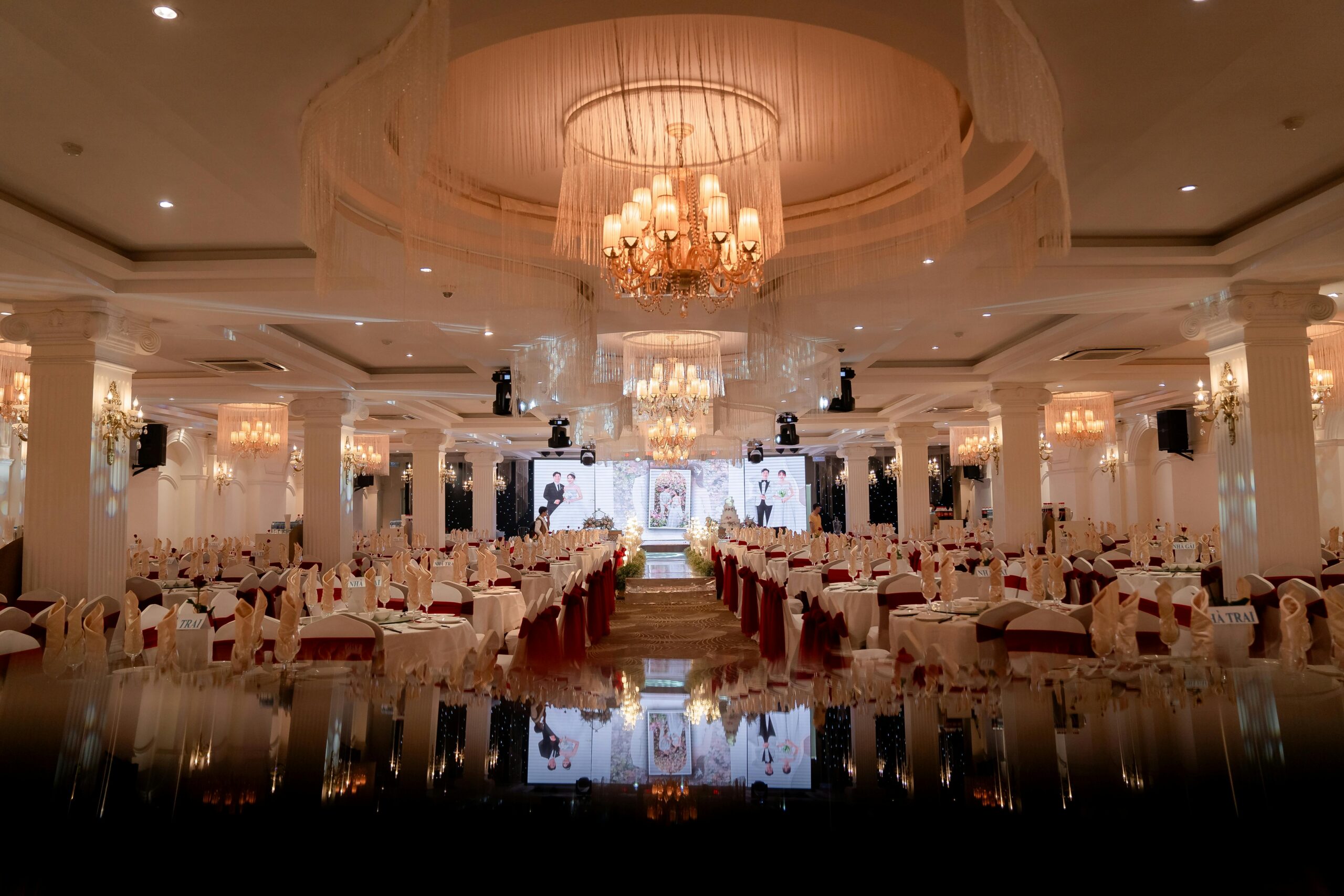
Two wedding venue rentals may both advertise a capacity of 200 guests, yet one ballroom feels spacious while the other feels overcrowded. The difference usually comes down to dance floor size, buffet placement, bar setup, and whether the wedding venue rental has enough room for a stage or live band.
Request a sample floorplan for your actual guest count and preferred table style before booking the wedding venue rental. Round tables, long banquet tables, and mixed seating layouts all change the footprint and guest flow inside the ballroom.
If you want a better understanding of ballroom capacity, this guide to ballroom wedding capacity explains what affects guest comfort, traffic flow, and overall layout beyond the number listed in the venue brochure.
If you’re planning a wedding for around 100 guests, this guide to 100 guest wedding venues in Houston can help you compare layouts, guest flow, and ballroom sizes that work well for that event size.
Bridal Suite and Groom’s Lounge Details That Matter
A bridal suite and groom’s lounge can improve the overall wedding venue rental experience, but the details matter. Confirm whether the wedding venue rental includes private access, mirrors, restrooms, seating, electrical outlets, and permission for food and drinks inside the suites.
Ask when the wedding venue rental opens the bridal suite and groom’s lounge on event day. Some venues only provide access shortly before guest arrival, which may force the wedding party to get ready off-site.
Also confirm whether the wedding venue rental includes the suites in the base price or charges them as add-ons. Some venues include a basic holding room but charge extra for a larger bridal suite with upgraded finishes and additional amenities.
Time, Access, and the Fine Print on Hours
Most venue rentals are sold as a time block, not “the whole day.” That block has to fit setup time, guest arrival, ceremony, reception, and breakdown.
A typical timeline might include:
- Vendor load-in and setup window
- Guest arrival and ceremony
- Cocktail hour and reception
- Load-out and cleanup time
Overtime fees are where budgets get squeezed. Ask the venue’s hard stop times for music cutoff, bar cutoff, and final venue exit time, since they may differ.
Also confirm whether early access is included. If your florist needs two extra hours for an installation, that can mean either paying overtime or paying for an earlier start.
Vendor Access and Load-In Logistics
Vendor access may not sound important during a venue tour, but it can completely affect a wedding venue rental on event day. Ask about loading docks, freight elevators, door widths, and the distance between vendor parking and the ballroom entrance.
Confirm the wedding venue rental load-in and load-out rules, including vendor parking access and whether vendors must move vehicles after unloading equipment. If the wedding venue rental sits in a busy downtown corridor or a tight urban location, these restrictions can impact the entire event timeline.
Many wedding venue rentals require insured vendors. Ask what insurance coverage the venue requires and whether vendors must provide a certificate of insurance before the wedding day.
Furniture, Rentals, and What “Included Tables and Chairs” Really Means
“Tables and chairs included” can mean very different things. Some venues include basic banquet tables and standard chairs, while anything upgraded is extra.
Common items that may be included:
- Banquet tables (rounds and/or rectangles)
- Cocktail tables
- Ceremony chairs
- Reception chairs
Common gaps that often surprise couples:
- Specialty chairs (Chiavari, ghost, upholstered, etc.)
- Upgraded tables (farm tables, serpentine, custom head table)
- Lounge furniture for cocktail hour space
- Bars, staging, or a built-in dance floor platform
Wedding venue rental packages often include linens, napkins, charger plates, and place settings only when the venue provides catering services. If you choose outside catering for your wedding venue rental, you may need to price these items separately unless the venue clearly lists them as included.
Layout flexibility matters here too. If a venue has flexible event layouts, ask whether they have multiple table sizes, extra cocktail tables for mingling, and options for a larger dance floor without sacrificing dinner seating.
Setup and Teardown: Who Moves What?
Some wedding venue rentals include tables and chairs but do not include the labor to set them up. That means you may still need a setup crew to arrange furniture according to your wedding venue rental floorplan.
Ask who handles table and chair setup, who flips the ballroom between the ceremony and reception, and who manages furniture breakdown at the end of the wedding venue rental. If the venue does not provide labor, you may need to hire staff through a planner, rental company, or event staffing service.
Cleanup policies can also affect the final wedding venue rental cost. “Broom clean” usually means you remove decorations, bag trash, and leave the ballroom reasonably tidy while the venue handles deep cleaning.
Ask what the wedding venue rental cleanup service includes, whether the venue charges a cleaning fee, and what situations trigger extra charges. Spills, confetti, glitter, and leftover catering items commonly lead to additional cleanup fees.
Staffing and On-Site Support: Coordinator, Security, and Attendants
One of the biggest misunderstandings is assuming a venue manager is the same as a wedding coordinator. They’re not.
A venue manager focuses on the building: unlocking doors, enforcing rules, and protecting the property. A wedding coordinator focuses on the timeline, vendor cues, and keeping the day moving.
Many venues also require certain staff roles depending on guest count, alcohol service, and parking constraints. Common required roles include:
- Security
- Parking attendants
- Bartenders (if alcohol is served)
- Custodial attendants for restrooms and trash
Ask for staffing minimums, hourly rates, and whether tips, a service charge, or gratuity are expected. Some venues build these into an admin fee or a mandatory staffing line item.
Day-Of Coordination vs. Venue Management
Venue management typically handles access, rules, and facility issues. Day-of coordination manages the wedding timeline, the ceremony processional, vendor arrivals, and reception events like toasts and cake cutting.
If coordination isn’t included, budget for an independent planner or day-of coordination. It’s one of the few expenses that can prevent expensive mistakes, like missing setup time or running into overtime fees because the timeline slipped.
If you want a strong list of planning questions that uncover staffing gaps, this guide to questions to ask before booking a ballroom wedding venue is a helpful checklist to bring on venue tours.
What’s Included for Lighting, Sound, and Power (Often Misunderstood)
Most venues include basic house lighting and standard outlets. That’s enough to see and to power small items, but it may not be enough for a luxury wedding atmosphere with dramatic lighting and a full band.
Baseline inclusions often look like:
- House lights (on dimmers sometimes, sometimes not)
- Standard wall outlets
- Basic room power for typical events
Common add-ons include uplighting, pin spots for centerpieces, intelligent lighting, special rigging, and projector/screens. Some venues require you to use a preferred vendor list for AV, which can raise costs quickly.
For music, confirm what’s included for sound system support. A DJ usually brings their own speakers, but they may need dedicated circuits, a clean setup area, and a microphone for toasts and ceremony.
AV and Power Questions to Ask Before You Sign
Ask where power drops are located and whether the wedding venue rental allows extension cords. Some wedding venue rentals restrict floor tape or require cable ramps, which can increase setup time and production costs.
For an outdoor ceremony space, confirm whether the wedding venue rental provides power at the ceremony site or whether your vendors need a generator. Generators add noise, cost, and another vendor to the wedding venue rental load-in schedule.
Also ask about sound limits and music curfews before signing the wedding venue rental contract. A strict cutoff time can affect your reception timeline and determine whether guests need to move the after-party to another location.
Catering, Bar, and Alcohol Rules That Change the Total Cost
Catering options can significantly change the total wedding venue rental cost. Before booking, confirm whether the wedding venue rental includes in-house catering, allows outside catering, or limits you to a preferred vendor list.
In-house catering can simplify a wedding venue rental because the venue already coordinates staffing, rentals, and kitchen logistics. Outside catering gives couples more menu flexibility, but it may require extra kitchen equipment, additional staff, and more detailed load-in coordination.
Bar service has multiple pricing models:
- BYOB with professional bartenders
- Hosted bar packages (per person)
- Consumption bar (pay for what’s poured)
- Cash bar (less common at weddings, sometimes restricted)
In Texas, alcohol service is tightly regulated. Ask whether the venue requires TABC-certified bartenders, and whether the bar team provides liability insurance.
If you’re bringing alcohol, ask who is responsible for permits, and whether the venue requires a certificate of insurance listing them as additional insured. This detail can affect your vendor selection and timeline.
Service Charges, Gratuity, and Hidden Line Items
This is where “the quote” and “the invoice” can look very different. Typical add-ons include a service charge, gratuity, staffing fees, cake cutting fee, and corkage.
Ask for a sample invoice based on a realistic guest count and bar package. The sample invoice should clearly show service charge percentages, included gratuity, and all mandatory venue fees.
Also ask how the venue prices late-night snacks, coffee service, and water stations. These add-ons often fall outside the main catering total while still increasing staffing and rental costs.
Parking, Transportation, and Guest Experience Logistics in Houston
Parking can significantly affect the guest experience at a wedding venue rental, especially at a centrally located Houston venue where parking lots are smaller and traffic is heavier. Confirm how many parking spaces the wedding venue rental includes, where guests park, and whether overflow parking options are available nearby.
Ask whether valet service is optional or required for the wedding venue rental. Some venues require valet parking once your guest count reaches a certain number, which adds another vendor and additional parking attendants to the final cost.
Ride-share logistics also matter for a smooth wedding venue rental experience. Confirm a safe Uber and Lyft drop-off zone and make sure the venue provides clear entrance signage so guests can easily find the ballroom.
Accessibility should also be part of every wedding venue rental discussion. Confirm ADA access, ramps, elevators, and restroom accessibility, and ask whether stairs or restricted areas could limit mobility for some guests.
Weather and Comfort Planning for the Houston Area
Heat, humidity, and sudden rain are normal here, even when forecasts look fine. That affects outdoor ceremonies, photos, and guest movement between spaces.
Ask how the venue handles weather backups in real time. A good indoor venue option (weather-proof) is only useful if it’s available, ready, and included without extra fees.
Also ask about climate control in each space. Some venues cool the ballroom well but struggle in foyers or cocktail hour space, which can make guests uncomfortable before dinner even starts.
Contracts, Deposits, and Policies: The Inclusions That Protect Your Budget
Your wedding venue rental contract should clearly explain included services, optional upgrades, and required fees. If a detail matters to your event, make sure the wedding venue rental contract includes it in writing instead of relying on verbal promises during the venue tour.
At a minimum, ask the venue to list included items, add-on pricing, and who supplies what. This is where you confirm furniture counts, layout flexibility, staffing, AV, and vendor access rules.
Pay attention to the financial terms. You should clearly see the deposit amount, the payment schedule, and the cancellation policy.
Common venue fees to look for include:
- Damage deposit (refundable if there’s no damage)
- Cleaning fee (sometimes flat, sometimes conditional)
- Admin fee (often non-refundable, sometimes a percentage)
- Liability insurance requirements for you and/or vendors
If the wedding venue rental requires liability insurance, ask about the required coverage limits and the process for submitting proof of insurance. Many wedding venue rentals require a certificate of insurance before the event date, while some venues require insurance documentation before final payment.
Force majeure language matters too. Rescheduling and cancellation rules vary widely, and Houston weather events can affect travel, power, and vendor availability.
Couples should also review a detailed list of questions to ask your wedding venue before signing a contract to avoid unexpected fees, vendor restrictions, or scheduling issues later in the planning process.
Common Mistakes Couples Make When Comparing Venue Rentals
The most common mistake is comparing only the base rental price. Total cost depends on rentals, labor, and required vendors.
Another common issue is not confirming setup time, breakdown, overtime rates, and vendor access rules. If your rental is “six hours,” but you need three hours of setup and one hour of load-out, that six-hour number stops feeling generous.
Couples also underestimate how much a floor-plan affects the experience. If you want to geek out on layouts before you commit, this guide to ballroom wedding layouts shows how different ballroom setups change flow, dance floor placement, and head table options.
A Simple Line-Item Template to Request From Any Venue
Ask every venue to provide a line-item quote that lists:
- Spaces included (ceremony space, reception hall, cocktail hour space, suites)
- Hours included, plus setup time and breakdown time
- Overtime fees and hard stop times
- Furniture included (tables, chairs) with counts
- What labor is included (setup, teardown, cleanup)
- Staffing included and required (venue manager, security, parking attendants, bartenders)
- AV and lighting inclusions, plus power requirements for bands and DJs
- Parking details, valet rules, and ride-share zones
- All required fees (cleaning fee, admin fee, damage deposit, service charge)
- Insurance requirements (liability insurance and certificate of insurance details)
Then ask for two more lists: what’s excluded and what’s optional, with pricing for each. That one step makes venue comparisons fair and keeps your budget grounded in reality.
FAQ
What Is Included in a Wedding Venue Package?
It depends on whether the venue is rental-only or a full-service venue with event packages. Many rentals include the space, a set time block, basic tables and chairs, and limited on-site support, while catering, bar service, linens, place settings, and day-of coordination may be separate.
Always ask for inclusions and exclusions in writing, especially if the venue uses a preferred vendor list or has required vendors.
What Is the 50 20 30 Rule for Weddings?
It’s a budgeting guideline some couples use to keep spending balanced. Roughly 50% goes to the reception (venue, food, bar), 20% goes to top “must-haves” (photo/video, attire), and 30% covers everything else (flowers, music, stationery, extras).
It’s not a strict rule, but it helps you see quickly whether the venue and catering costs are taking over the budget.
What Is Included in a Venue Rental?
Typically, a venue rental includes the event space and a set time block. Some venues also include tables and chairs, basic lighting, a venue manager, and standard cleanup, while setup labor, security, and specialty rentals cost extra.
The safest approach is to confirm vendor access, load-in/load-out rules, and whether breakdown is included before you sign.
How Much Does a Wedding Venue Cost in Houston?
Pricing varies widely based on location, guest count, day of week, season, and what’s included. Rental-only venues may look cheaper upfront, while all-inclusive wedding packages can cost more but cover major line items like catering, staffing, rentals, and bar service.
If you want a clearer picture of what couples actually pay once fees and add-ons are included, this breakdown of Houston venue pricing is a useful reference.