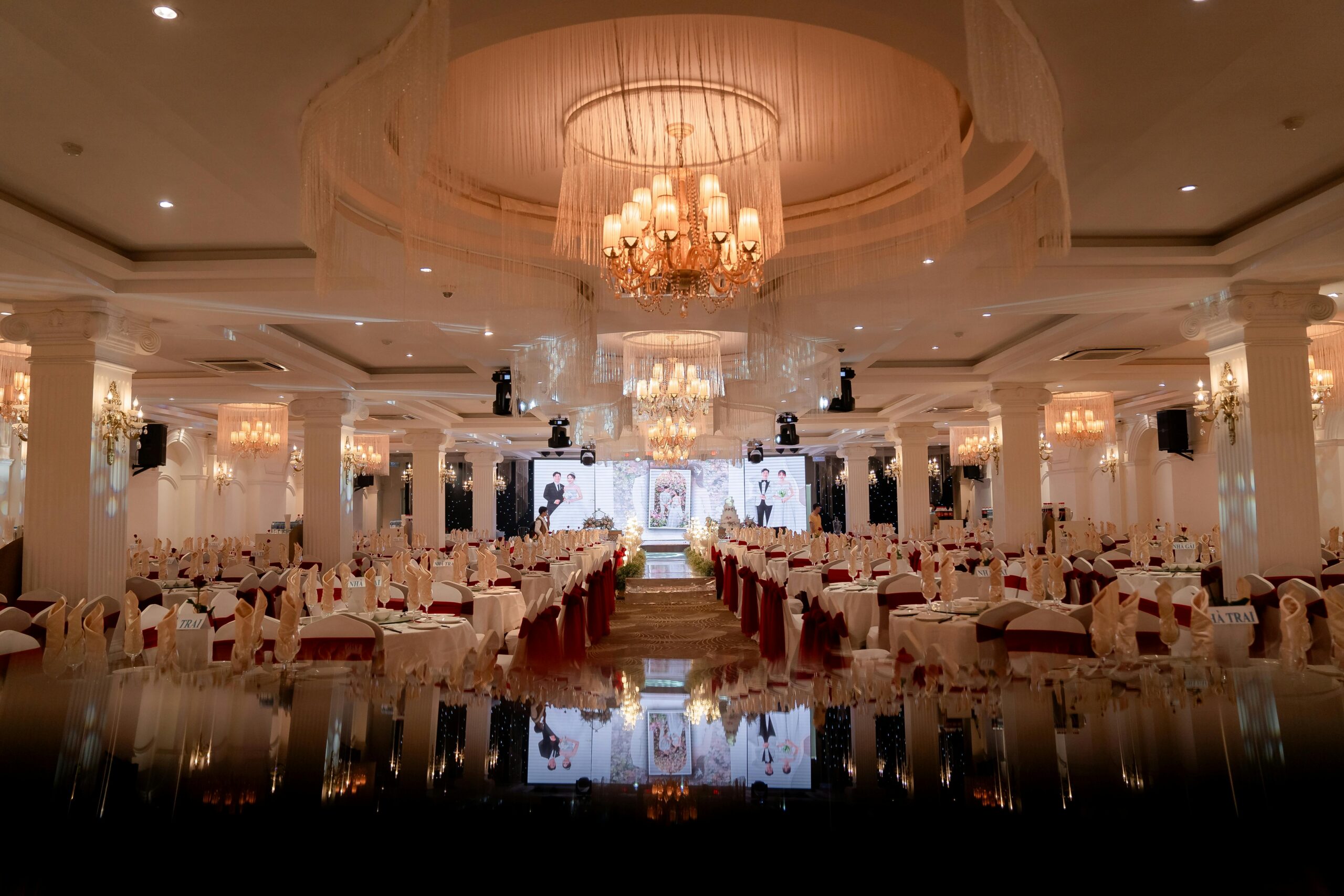
Most “surprise” wedding costs in the Houston area come from one place: assuming the venue rental fee includes labor, rentals, and logistics when it really only covers the room and the hours. If you’re comparing wedding venue rentals in Houston, this guide will help you understand what the wedding venue rental actually includes, which services cost extra, and what details you should confirm in writing before signing a contract. Start With the Key Distinction: Venue Rental vs. Full-Service Venue A venue rental is usually space plus time. You’re paying for access to the ceremony space, reception hall, and any other areas listed, for a defined block of hours. A full-service venue is different because it bundles more of the wedding into event packages. That can include catering, bar service, staffing, rentals, and sometimes day-of coordination. The tricky part of a wedding venue rental is that a lower base price can quickly turn into a higher total cost once you add tables, chairs, linens, staffing, security, and cleanup services. Many couples compare wedding venue rentals by the rental fee alone and overlook required add-ons that significantly increase the final budget. Set expectations early during the wedding venue rental process by requesting a detailed line-item breakdown before signing the contract. If a venue cannot clearly explain included services, optional upgrades, and mandatory fees, the wedding venue rental may create planning and budgeting problems later. A Quick Checklist to Classify Any Houston Venue Offer Ask one direct question about the wedding venue rental: does the price include food and bar service, staffing, rentals, and coordination, or does it only cover the room and event hours? Then confirm the wedding venue rental inclusions in writing. Request a list of included services, exclusions, required vendors, and the preferred vendor list if the venue provides one. If the wedding venue rental requires in-house catering, a specific bar team, or a designated AV company, include those costs in your total budget. Required vendors can raise the final wedding venue rental cost just as much as the base rental fee. For a clearer way to compare venue pricing, this guide to Houston wedding venue costs breaks down the major pricing factors based on season, guest count, and included services. What Spaces Are Typically Included (and How to Confirm Access) Most Houston wedding rentals include some combination of: Some wedding venue rentals advertise multiple ballroom spaces, but the contract may only include one event room. Ask which areas the wedding venue rental reserves exclusively for your event and which spaces guests may share with other events happening at the venue. Houston weather makes indoor vs. outdoor details matter. If you love an outdoor ceremony space, confirm the indoor venue option (weather-proof) and how quickly the venue can flip to the backup plan. Guest flow is another detail that’s easy to miss on a tour. Ask where guests enter, where they queue, where they mingle during cocktail hour, and how they transition into the ballroom without bottlenecks. Ballroom Layout Reality: Capacity vs. Comfort Two wedding venue rentals may both advertise a capacity of 200 guests, yet one ballroom feels spacious while the other feels overcrowded. The difference usually comes down to dance floor size, buffet placement, bar setup, and whether the wedding venue rental has enough room for a stage or live band. Request a sample floorplan for your actual guest count and preferred table style before booking the wedding venue rental. Round tables, long banquet tables, and mixed seating layouts all change the footprint and guest flow inside the ballroom. If you want a better understanding of ballroom capacity, this guide to ballroom wedding capacity explains what affects guest comfort, traffic flow, and overall layout beyond the number listed in the venue brochure. If you’re planning a wedding for around 100 guests, this guide to 100 guest wedding venues in Houston can help you compare layouts, guest flow, and ballroom sizes that work well for that event size. Bridal Suite and Groom’s Lounge Details That Matter A bridal suite and groom’s lounge can improve the overall wedding venue rental experience, but the details matter. Confirm whether the wedding venue rental includes private access, mirrors, restrooms, seating, electrical outlets, and permission for food and drinks inside the suites. Ask when the wedding venue rental opens the bridal suite and groom’s lounge on event day. Some venues only provide access shortly before guest arrival, which may force the wedding party to get ready off-site. Also confirm whether the wedding venue rental includes the suites in the base price or charges them as add-ons. Some venues include a basic holding room but charge extra for a larger bridal suite with upgraded finishes and additional amenities. Time, Access, and the Fine Print on Hours Most venue rentals are sold as a time block, not “the whole day.” That block has to fit setup time, guest arrival, ceremony, reception, and breakdown. A typical timeline might include: Overtime fees are where budgets get squeezed. Ask the venue’s hard stop times for music cutoff, bar cutoff, and final venue exit time, since they may differ. Also confirm whether early access is included. If your florist needs two extra hours for an installation, that can mean either paying overtime or paying for an earlier start. Vendor Access and Load-In Logistics Vendor access may not sound important during a venue tour, but it can completely affect a wedding venue rental on event day. Ask about loading docks, freight elevators, door widths, and the distance between vendor parking and the ballroom entrance. Confirm the wedding venue rental load-in and load-out rules, including vendor parking access and whether vendors must move vehicles after unloading equipment. If the wedding venue rental sits in a busy downtown corridor or a tight urban location, these restrictions can impact the entire event timeline. Many wedding venue rentals require insured vendors. Ask what insurance coverage the venue requires and whether vendors must provide a certificate of insurance before the wedding day. Furniture, Rentals, and What “Included Tables and Chairs” Really

How Much Does a Wedding Venue Cost in Houston?
Most couples researching wedding venue cost Houston start with one number in mind. Then they realize pricing is built from several layers. The answer is not a single citywide average. Instead, it’s a pricing framework. It separates the venue rental fee, the food-and-beverage minimum, and the extras that push a quote up or down. This guide explains realistic Houston price ranges. It also breaks down what is usually included and what is extra. Most importantly, it shows how to compare proposals with confidence. What Wedding Venues Cost in Houston (Typical Ranges) In the Houston area, same herecan start around $2,500 to $6,000 for a rental-only space. Many mid-market venues fall in the $7,000 to $15,000 range. Luxury properties, large ballrooms, or all-inclusive packages can reach $18,000 to $35,000 or more. These ranges matter. Couples often compare a low rental quote to a package price that already includes catering, bar service, staffing, and setup and teardown. Listing sites such as Here Comes The Guide, Wedding Spot, and The Knot often show a starting price based on guest count. However, that number rarely reflects the real total on the contract. A starting price can help with screening. Still, it becomes misleading if it excludes service charge, gratuity, sales tax, ceremony space fees, or required vendors. A ballroom usually carries a higher base price or package minimum. That is because it often includes an indoor venue, climate control, built-in lighting, and stronger guest amenities. By contrast, barn and ranch venues may appear cheaper at first. However, rentals, staffing, restrooms, generators, flooring, or climate control can erase the savings quickly. Couples also forget that “venue cost” may mean three different things: The practical takeaway is simple: in Houston, the advertised number is usually a starting point, while the signed total reflects policy, guest count, and operational requirements. Quick Range Snapshot by Venue Style Ballrooms often command higher minimums because they solve weather risk, support larger capacity, and usually require fewer outside rentals. That convenience has monetary value, especially in a city where heat, humidity, and storms can disrupt outdoor timelines. Barn and ranch venues can look budget-friendly on paper, but many couples end up paying more once they add rentals, labor, and transportation. A lower sticker price is not a lower event cost if the site needs more infrastructure to function smoothly. What Couples Usually Forget to Include in “Venue Cost” Service charge, gratuity, and sales tax can add thousands to a proposal. This is especially true when catering and bar are tied to the venue. These fees are not minor line items. They can significantly change affordability. That is why they should be included in every budget breakdown from day one when evaluating wedding venue cost Houston. Required security, valet, event insurance, and a preferred vendor list can also reshape the true spend. A venue with strict operational rules may still be worth it. However, the quote should always be evaluated as an all-in number, not just a base fee. The Biggest Price Drivers (What Actually Changes Your Quote) Guest count is the strongest pricing lever in most Houston weddings because catering, bar package costs, staffing, rentals, and even room selection scale with attendance. When a venue uses per-guest pricing or a food-and-beverage minimum, every added table affects more than food alone. Date and time also change pricing faster than many couples expect. A Saturday wedding in peak season, especially spring and fall, often carries higher minimums, stricter payment schedule terms, and fewer negotiation opportunities than a Friday wedding, Sunday wedding, or off-season date. Layout matters because event flow affects both cost and guest experience. If the ceremony space, cocktail hour, and reception all work within one property, couples often save on transportation, duplicate rentals, and timeline complexity. Guest Count and Space Fit (Avoid Paying for the Wrong Size Room) A room that is too large may require extra decor, upgraded lighting, and more tables. Otherwise, it can feel empty. A room that is too small creates bottlenecks at the bar, buffet, and entrances. This can lead to extra staffing or a compromised floor plan. Capacity should always be defined by use type, not by one marketing number. For example, a venue may hold 200 guests for ceremony seating. However, it may hold fewer for a seated dinner with a dance floor. It may also hold more for cocktail-style service. Because of this, couples need a floor plan that matches their actual event timeline. Seasonality and Day-of-Week Pricing in the Houston Area Peak season in Houston usually centers on spring and fall Saturdays because the weather is more comfortable and family travel is easier. This demand pushes up minimums and reduces flexibility on deposits, cancellation policy terms, and room access windows, which directly impacts wedding venue cost Houston. Brunch weddings, weekday celebrations, and off-season dates often reduce venue minimums and expand vendor availability. Lower demand does not mean lower quality; it often means better leverage and a smoother planning process. What’s Typically Included vs What’s Usually Extra Most Houston venues include some combination of tables and chairs, basic linens, standard lighting, a bridal suite, and a defined setup and teardown window. Those inclusions matter because replacing even basic inventory through outside rentals can materially raise the final bill. Common extras include upgraded linens, specialty chairs, draping, extended hours, security, valet, cleanup fee charges, and enhanced sound system support. A quote that looks competitive can become expensive if core operating needs sit outside the base price. An all-inclusive wedding venue can be cost-effective when it reduces coordination errors and hidden line items. Bundled pricing is not automatically cheaper, but it often creates better cost predictability because fewer vendors are adding independent fees and overlapping labor charges. Upgrades such as uplighting and draping can significantly enhance the overall look of a ballroom, but they are usually priced separately and should be factored into the total event budget early. Venue Rental Fee vs Food-and-Beverage Minimum A food-and-beverage minimum is the amount you must spend on catering and bar through the venue or its approved